Call for Poster Papers Poster Papers at PNSQC 2026
Not every idea needs a 45-minute stage and a 12-page paper. Some of the best conversations at PNSQC happen around a poster, a drink, and a question nobody has fully answered yet.
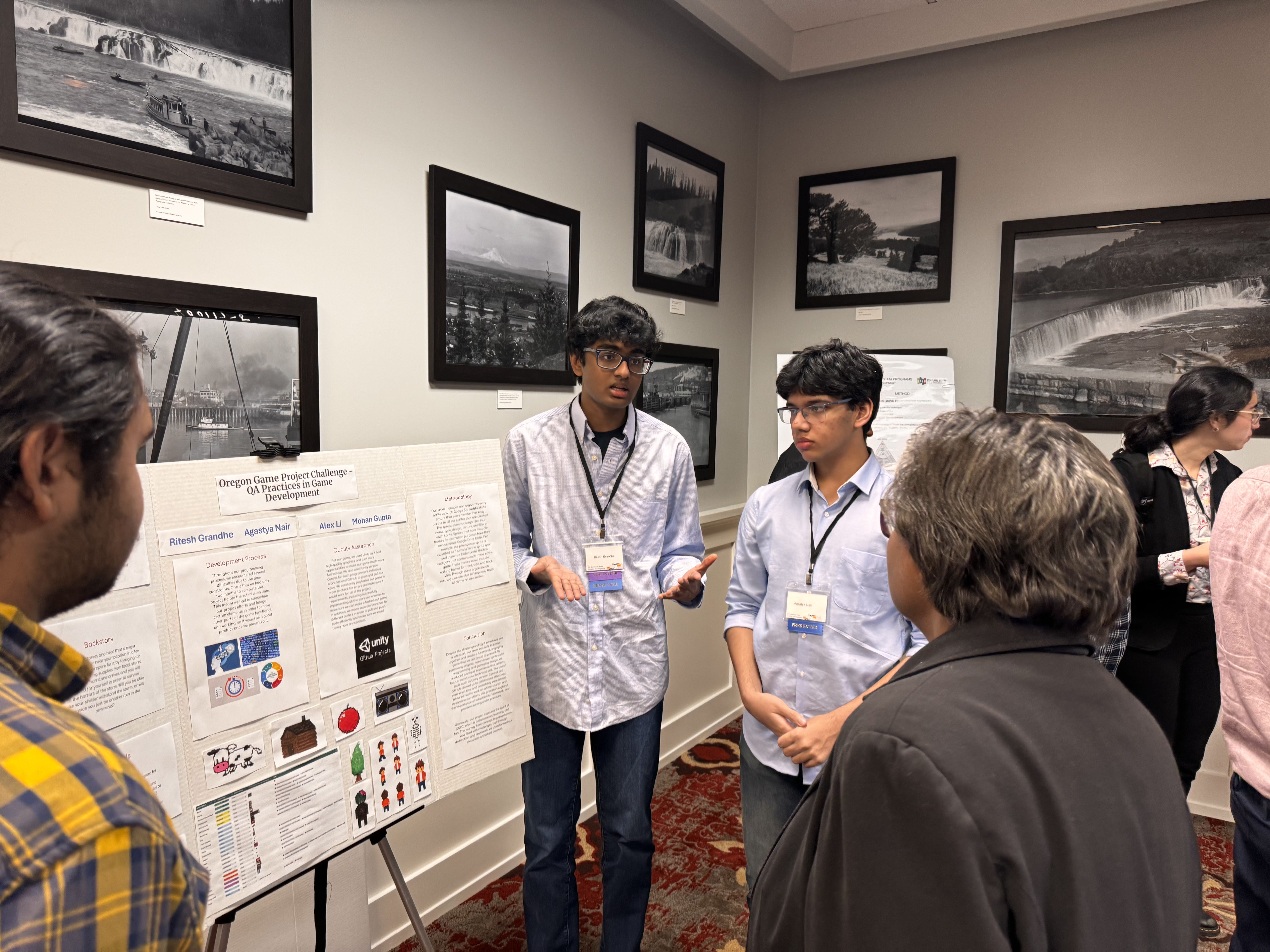
Poster papers are a different format. Interactive, exploratory, informal. You display your work during the evening networking session and talk directly with attendees who are genuinely curious about your topic. Field test your ideas. Share what you are learning. Start a conversation.
50% off conference registration for accepted poster authors.
Space is limited. Proposals are reviewed on a rolling basis and accepted until all spots are filled or September 22, whichever comes first.
PNSQC is one of the few practitioner software quality conferences in the world to offer a poster paper program. Academic conferences have done this for decades. Almost no one in the practitioner world has followed.
We built this program because our mission has always been to serve the community: real practitioners sharing real ideas, with a low enough barrier that you do not need a publication record, a research budget, or a polished talk to contribute. If you have something worth discussing, you belong here.
Who this is for
Poster papers are intentionally a different format from our technical papers, serving a different purpose. Here are four kinds of people who tend to find them most useful.
The Explorer
You have an idea worth discussing but not enough data for a full paper. A poster lets you road-test it with experienced practitioners before you commit.
The Practitioner
You did something interesting at work. It worked or it did not. Either way there is a lesson. No formal research framework required.
The Emerging Speaker
You want a feel for conference presenting before committing to a full session. Talking to a few people at a time is different from a room of 150.
The Student
A capstone project, thesis, or course research idea belongs here. No prior conference experience required. You do not need to be done yet.
What a poster paper actually is
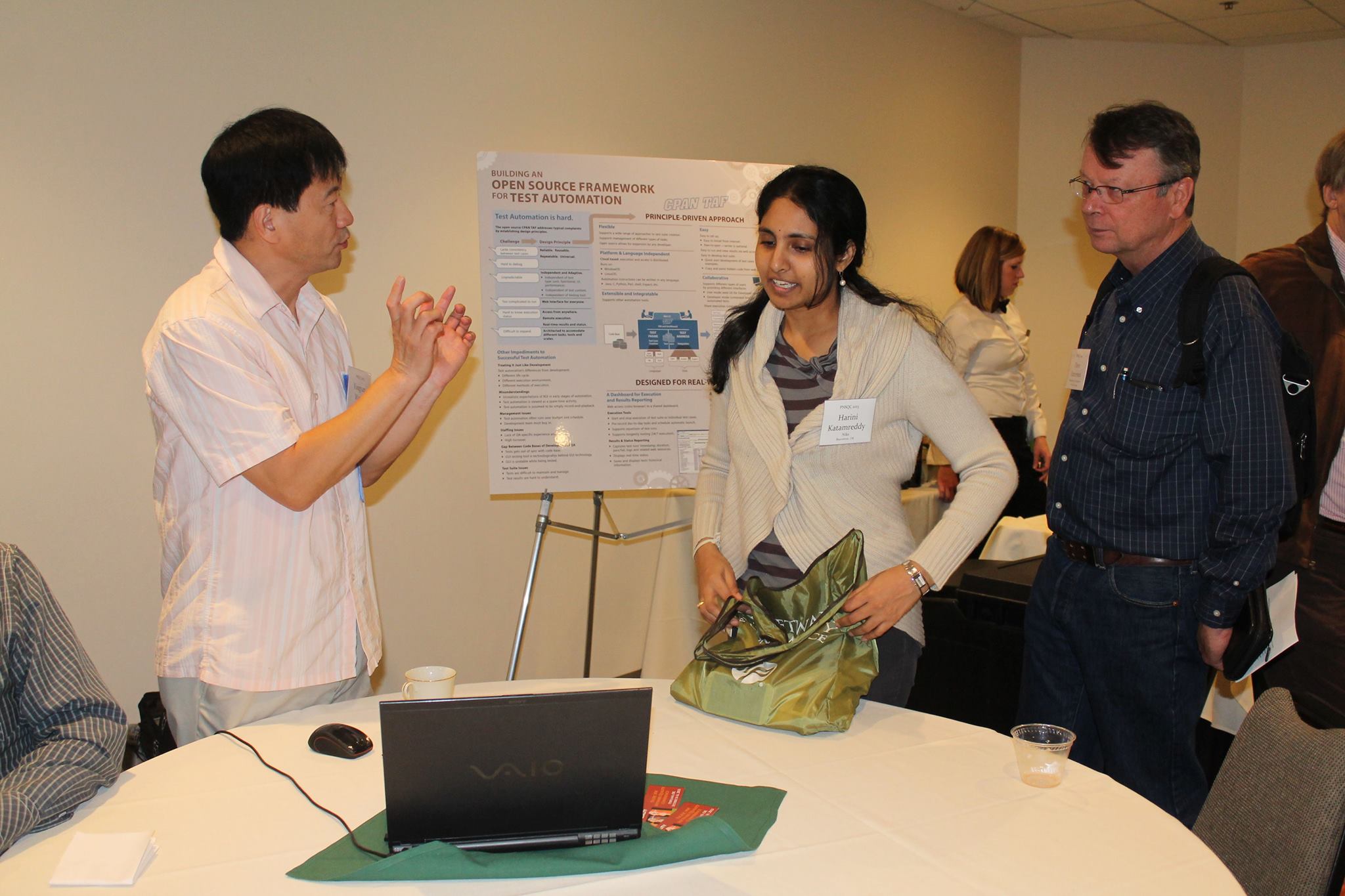
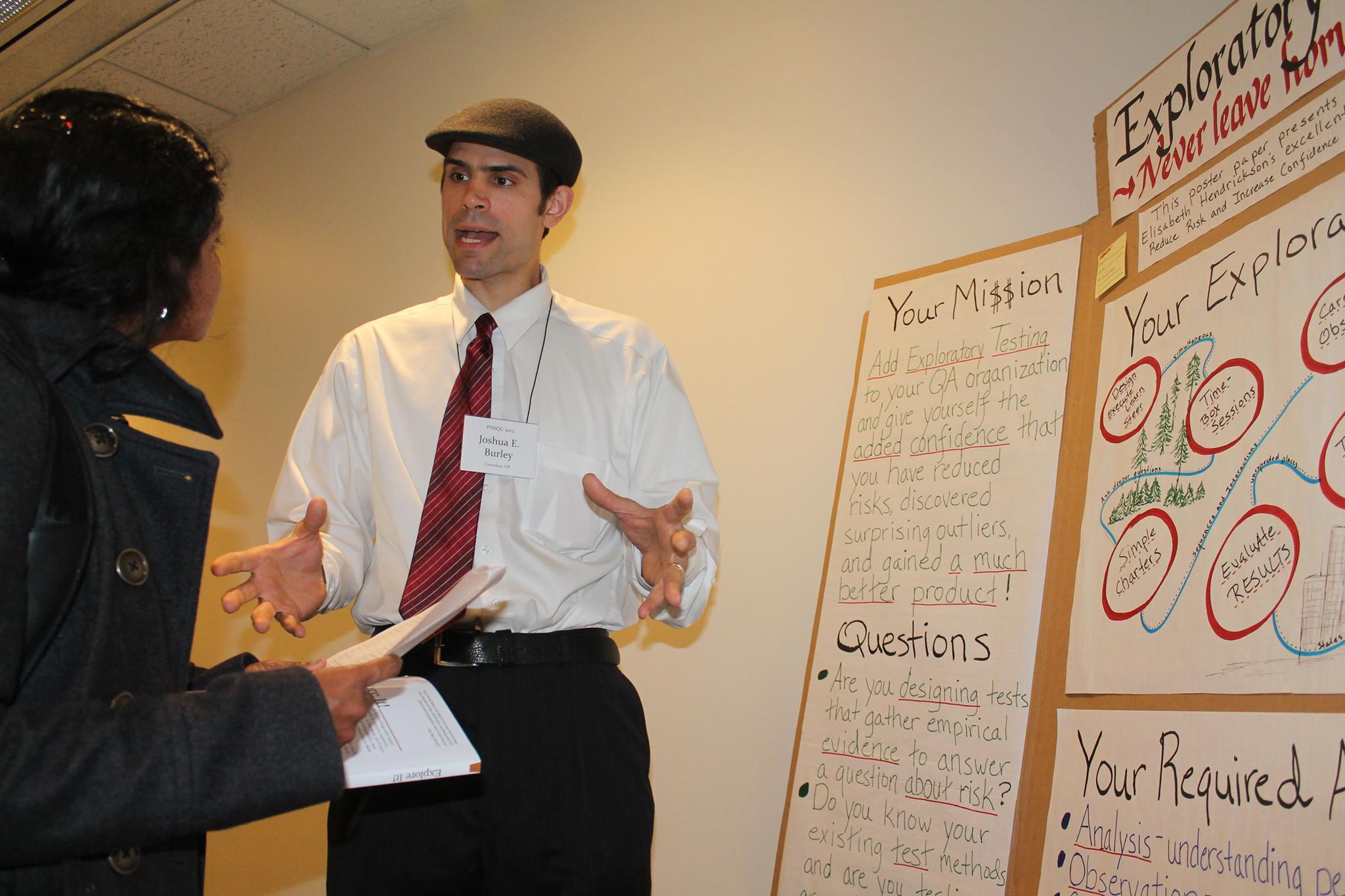
A poster paper is a visual presentation of an idea, project, experiment, or lesson learned. Poster boards sit on provided easels, or large-format papers can be taped to a wall. You stand with your poster during the evening Happy Hour and Poster Session and talk with whoever stops by.
Unlike a full technical paper:
- No formal written paper required
- Work-in-progress and exploratory ideas are explicitly encouraged
- Conversation and discussion are the whole point
- Visual storytelling, not lecture delivery
- Think "science fair" with a software quality twist
Consider preparing a 1 to 2 page handout to give away. It encourages your audience to keep thinking about your ideas after the conference. Some of the most interesting follow-up conversations at PNSQC have started with a handout someone found in their bag two days later.
"Each person or group engaged me in a different way. Each wanted to have a different discussion about the same material. An idea I offered as a small takeaway became much more pronounced. The little kernel, I realized, had the potential to be something much bigger."
That is exactly what poster sessions do. They surface the real idea inside the work. A thought you carried lightly becomes the thing everyone wants to talk about. That rarely happens in a 45-minute formal talk.
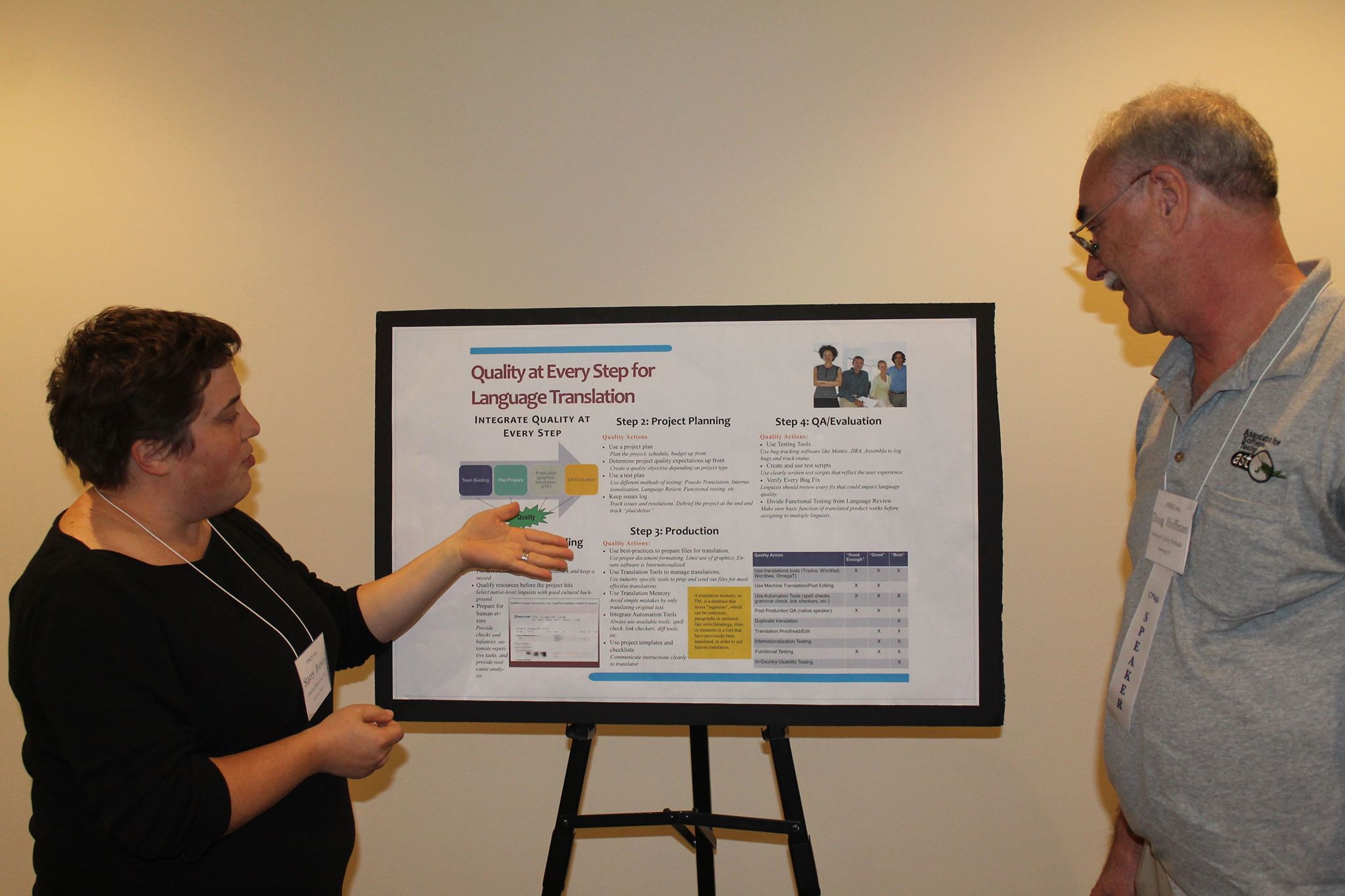
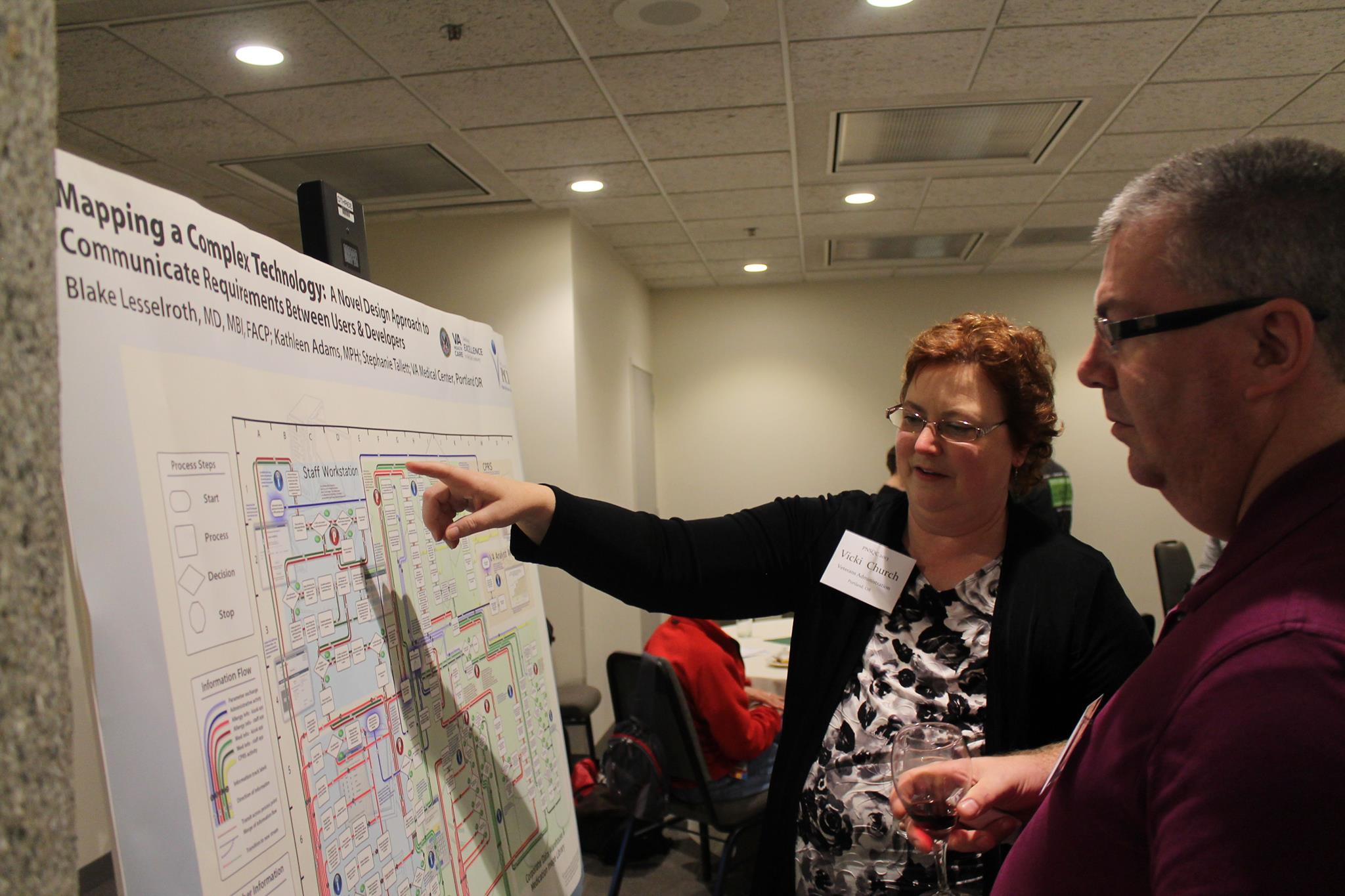
"I had never heard of PNSQC until last year. I put together a poster paper on ethical models and quality. It started some fantastic conversations, and I developed that into the talk I was invited to give this year."
What to present
If you are not sure whether your idea counts, it probably does. A good poster does not need all the answers. It needs an interesting question. Here are some examples of strong topics at PNSQC 2026.
- AI-assisted testing workflows and what actually happened
- Building an internal developer tool that saved us time
- Lessons learned from test automation attempts
- Developer experience improvements that increased team effectiveness
- Quality metrics dashboards you built and what they revealed
- CI/CD pipeline quality improvements
- Using static analysis, linters, and AI code review together
- Accessibility, performance, or security testing studies
- A feature flag experiment that changed how we release software
- Building software for AI agents instead of humans
- Reliability and observability experiments
- Student capstone, thesis, or course research
- Questions you are actively trying to answer
Accepted posters span the full range: polished research, handwritten exploratory ideas, and everything in between. What matters is the conversation it starts.
How to submit
The submission process is intentionally lightweight. No giant template, no multi-stage form. Three straightforward steps.
- Submit your proposal early. Proposals are accepted on a rolling basis until all spots are filled or September 22, whichever comes first. Include your poster title, a short abstract of 250 to 500 words, a brief bio for each presenter, and an optional sketch. The program committee will notify you by September 24.
- Create your poster and optional handout. Focus on what you are most passionate about. Keep it visual. A 1 to 2 page handout gives attendees something to take away. Templates are available on the Author Resources page.
- Show up ready to talk. While others are networking among peers, you are networking your topic and ideas with a focused, interested audience. Come ready to spread the joy of what you are excited about.
What to include in your proposal
- Poster title
- Abstract of 250 to 500 words describing your idea, project, or question
- Short bio for each presenter
- Optional: a rough sketch, mockup, or draft image of your poster
Spots are limited. Proposals are reviewed on a rolling basis and accepted until all spots are filled or September 22, 2026, whichever comes first. Submit early.
Submission cutoff: When all spots are filled or September 22, 2026, whichever comes first. Accepted poster authors receive a 50% discount on conference registration.
Key dates
| Dates | Milestone |
|---|---|
| Now until filled or Sept 22 | Submit your poster proposal: title, abstract, bio, and optional sketch. |
| Sept 24 | Receive notification from the program committee and your assigned reviewer. |
| Sept 28 | Submit your first draft poster to your assigned reviewer. |
| Sept 30 | Receive feedback from your reviewer. |
| October 12 to 13 | Share your ideas and discuss them with fellow attendees at the conference. |
Questions?
Email the program committee at program@pnsqc.org. If you are not sure whether your idea is a good fit, just ask. We would rather help you shape a proposal than have you talk yourself out of submitting.
For additional poster design guidance, see "Ten Simple Rules for a Good Poster Presentation" by Thomas C. Erren and Philip E. Bourne, published in PLOS Computational Biology.